Learn about Marie Curie, the pioneering scientist who won two Nobel Prizes. Discover her life, achievements, and legacy in STEM education, inspiring students worldwide.
Who Was Marie Curie?
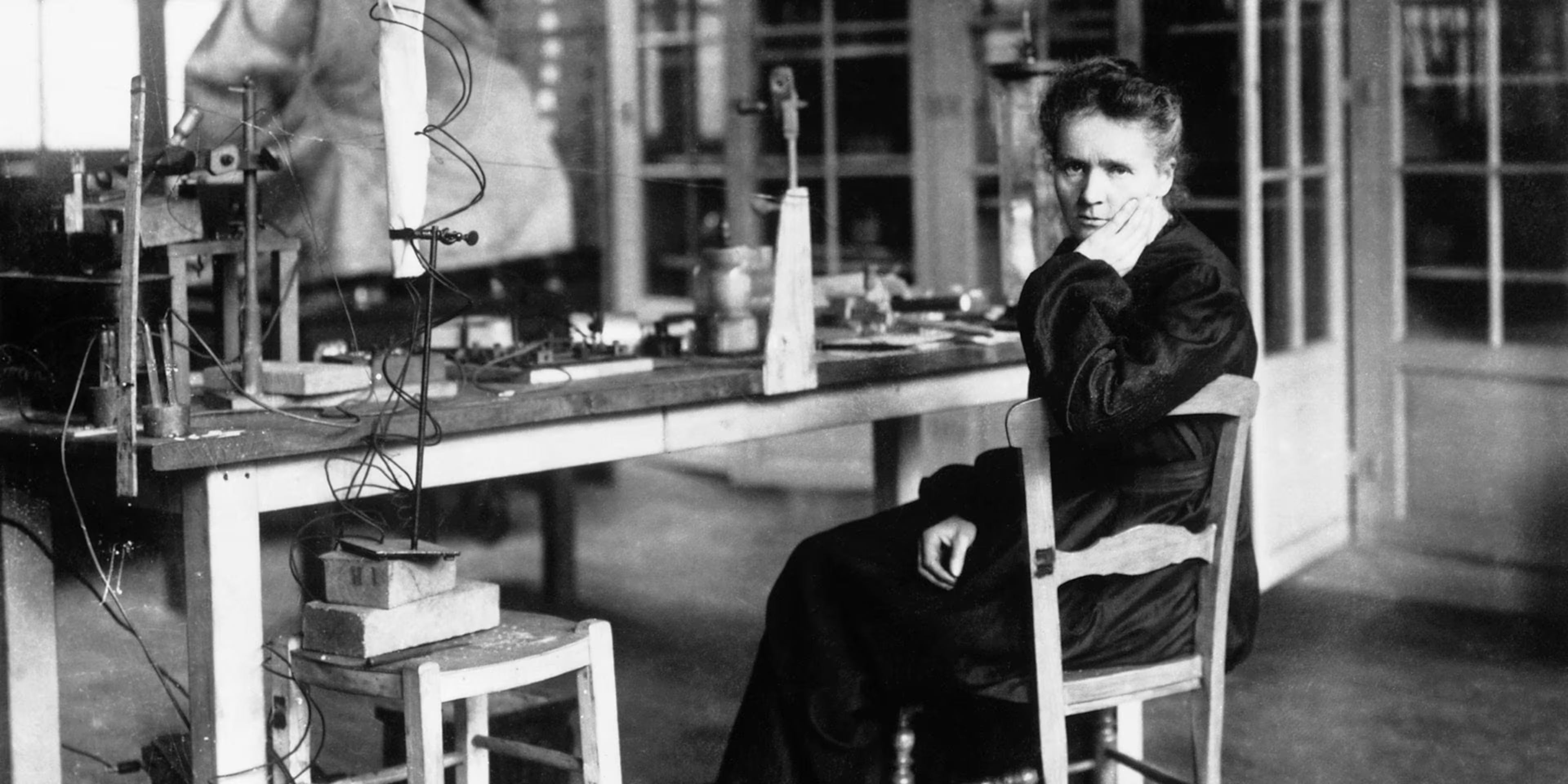
Marie Curie (1867–1934) was a groundbreaking scientist and educator whose research in radioactivity changed the world. She was the first woman to win a Nobel Prize and remains the only person to win Nobel Prizes in both Physics (1903) and Chemistry (1911). Her discoveries of radium and polonium not only advanced science but also contributed to life-saving medical treatments like cancer radiotherapy.
Marie Curie’s life is an enduring example of perseverance, curiosity, and lifelong learning, inspiring students, teachers, and researchers around the globe.
Early Life and Education
Born as Maria Skłodowska in Warsaw, Poland, Curie grew up in a family that valued education and intellectual development. Despite facing societal and gender barriers, she moved to Paris to study at the Sorbonne (University of Paris), earning degrees in physics and mathematics. Her determination demonstrates that passion and persistence can overcome obstacles, making her a role model for students today.
Scientific Achievements That Changed the World
Marie Curie’s research focused on radioactivity, a term she coined herself. With her husband Pierre Curie, she discovered two new elements:
- Polonium – named after her homeland, Poland
- Radium – key to pioneering treatments in medicine
Her achievements include:
- 1903 Nobel Prize in Physics for research on radioactivity
- 1911 Nobel Prize in Chemistry for the discovery of polonium and radium
- First female professor at the University of Paris
Curie’s work laid the foundation for modern science and medical treatments, and she remains a symbol of women’s leadership in STEM.
Marie Curie’s Legacy in Education
Marie Curie believed that education is the path to progress. Her philosophy emphasized:
- Knowledge sharing for the benefit of humanity
- Ethical responsibility and integrity in scientific research
- Lifelong learning and curiosity
Her legacy continues to inspire value-based education, encouraging schools like Marie Curie School to focus on holistic development, critical thinking, and innovation.
Why Marie Curie Is a Role Model for Students
Students today can learn from Marie Curie’s life by:
- Embracing STEM education with curiosity and creativity
- Developing resilience and problem-solving skills
- Understanding the importance of ethics, discipline, and societal contribution
At Marie Curie School, her story is integrated into teaching to motivate students to pursue excellence, explore their passions, and think critically.
Conclusion: Marie Curie’s Enduring Inspiration
Marie Curie’s life teaches us that curiosity, dedication, and perseverance can overcome any barrier. Her discoveries continue to impact science and medicine, while her advocacy for education inspires generations of learners worldwide. By following her example, students at Marie Curie School are encouraged to embrace learning, innovation, and holistic development, building a brighter future for themselves and society.
Admissions: /admissions
Programs: /programs
Contact Us: /contact